The Bed That Became a Desk: How Forced Stillness Quietly Produced Some of America's Greatest Work
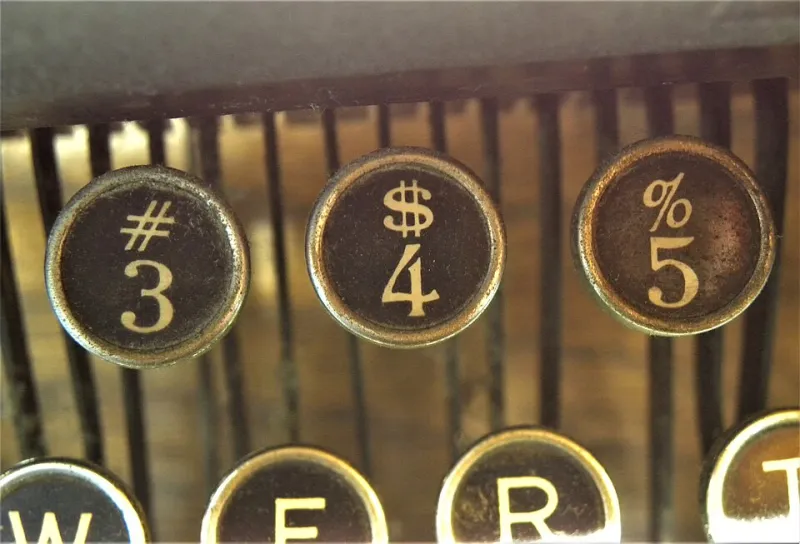
Photo: Mathieu Landretti, CC BY-SA 4.0, via Wikimedia Commons
There's a particular kind of misery in being stuck. The soup gets cold before you finish it. The ceiling develops cracks you could map. You know exactly how many tiles are in your bathroom because you've counted them twice.
We tend to write these stretches off as lost time. But history keeps a different ledger. Again and again, some of the most consequential American work didn't happen despite an illness — it happened because of one. The body stopped. The mind, with nothing left to do, kept going.
The Novelist Who Got Sick on Purpose (Sort Of)
Start with the strangest case: a man who may have engineered his own confinement.
In 1884, a 35-year-old journalist named Frank Norris— no wait, rewind further. In 1884, a struggling writer named Robert Louis Stevenson was, technically, Scottish. But the book he produced matters here because of what it cost him. Bedridden with chronic lung hemorrhages, Stevenson spent his confinement in Bournemouth, England, barely able to speak above a whisper, entertaining his stepson with a story about a map, a treasure, and a one-legged cook. Treasure Island — the book that would shape adventure fiction for the next century and a half, including every American kid who ever played pirate — came out of a sickroom.
That pattern repeats on American soil. Harriet Beecher Stowe's chronic melancholia and periods of nervous collapse didn't slow her down so much as redirect her; the emotional interiority that made Uncle Tom's Cabin detonate across a pre-Civil War nation came from a woman intimately acquainted with suffering and stillness. And when F. Scott Fitzgerald suffered his series of nervous breakdowns in the late 1930s, holed up in hotels and a Hollywood apartment, the raw, unflinching fragments he wrote in that period — later assembled into The Last Tycoon — showed a writer stripped of all pretense. Illness didn't give these writers talent. It gave them something rarer: uninterrupted hours and a reason to look inward.
The Inventor Whose Body Wrote the Specifications
Then there are the cases where the limitation itself was the blueprint.
Consider the story of the reclining wheelchair. In the 1970s, inventor and engineer Dean Kamen's early work on portable medical devices grew directly out of proximity to illness — his brother's difficulties as a young physician trying to deliver medicine to patients. But go further back and you'll find the purer example: Mary Sherman Morgan, and before her, the countless tinkerers who worked from kitchen tables while managing conditions that would have disqualified them from any corporate lab. When the traditional workplace says no — no ramp, no flexibility, no patience — the kitchen table becomes the workshop.
The pattern holds in one of America's most beloved stories: Milton Bradley, the Springfield, Massachusetts lithographer whose board game empire began when a man he'd hired to run his business skipped town and Bradley, depressed and broke, sat at his own table and invented a game. Not because he wanted to. Because he had to sit down.
What Stillness Actually Does to a Brain
There's a reason the sickbed kept producing breakthroughs, and it isn't romance. It's mechanics.
Neuroscientists have a term for what happens when external stimulation drops: the default mode network kicks in. It's the brain's background process — the thing that consolidates memory, connects distant ideas, and generates the sudden insights we later call inspiration. Modern life suppresses it. We fill every gap with a screen. A long recovery, before screens, was a default mode network field day.
Add to that the strange gift of forced perspective. When you cannot act, you can only observe. Writers confined to bed become ruthless noticers. Inventors managing chronic conditions become obsessive about efficiency, because inefficiency costs them something able-bodied people never pay. The limitation doesn't just permit reflection — it demands redesign.
The Season You Dread Might Be the One That Matters
Nobody is suggesting that illness is a gift. Ask anyone who's had one; they'd trade every insight for a healthy Tuesday. That's the honest part of this story. Stevenson would have written Treasure Island anyway, some say, and maybe so. But the record suggests otherwise: the work that endures often came from the people who had no other option but to sit with an idea until it gave in.
So the next time life hands you a forced pause — the surgery, the layoff, the long slow month on the couch — consider that the ceiling cracks might be worth studying. Some of the best ideas in American history were waiting exactly there, in the stillness nobody asked for and nobody planned.
You don't have to love the pause. You just have to stop assuming it's empty.