One Station, One Congregation, One Dream: How the Middle of Nowhere Made American Music
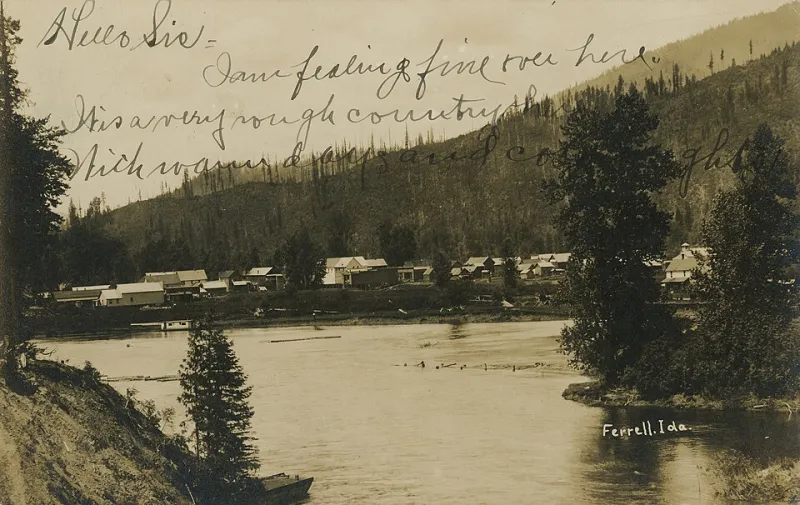
Photo: Steve Shook from Moscow, Idaho, USA, CC BY 2.0, via Wikimedia Commons
You can drive through a lot of America and hear nothing. Not silence exactly — the hum of a grain elevator, a dog, the church bell on the square — but nothing the rest of the country would call music.
And yet, an unreasonable share of the American songbook was written in exactly those places. Towns with one stoplight. Towns where the radio dial had two stations that came in clean. Towns so small that the audience for your first performance was twelve people in pews who'd known you since before you could walk.
It's tempting to treat those origins as obstacles the artists had to overcome — the poverty and the remoteness as things between them and their talent. Spend any time with these stories, though, and you start to suspect the opposite. The middle of nowhere wasn't the obstacle. It was the instrument.
When the Audience Is Everyone You Know
Start with church. For generations of American musicians — from gospel legends to country outlaws to soul singers — the first stage was a congregation. There's no gentler training ground and no more honest one. A congregation knows your mother. It knows when you're faking. You learn early that performance without sincerity doesn't land, because the people watching you can tell the difference between singing and meaning it.
Elvis Presley's first audience was the congregation at First Assembly of God in Tupelo, Mississippi — a town that, at the time, was a speck in the northeast part of the state. Johnny Cash grew up in Dyess, Arkansas, a planned farming colony so remote that the family worked cleared cotton land by hand. Dolly Parton came from a one-room cabin in the Smoky Mountains of Tennessee, in a family of twelve, where the radio and the church were the entire cultural universe.
In each case, the smallness did something a big city couldn't. It concentrated everything. When there's only one radio station, you listen differently — you absorb it completely, the way you'd never absorb a hundred stations. When there's one congregation, you learn to hold a room before you learn anything else. Scarcity of audience breeds intensity of attention.
The Radio in the Kitchen
Then there's the radio itself, which for rural America in the twentieth century was less a device than a doorway.
The Grand Ole Opry beamed out of Nashville on clear nights and landed in kitchens from the Ozarks to the Appalachians, and kids standing at those kitchen counters did the math: that person sounds like they could be from here. That could be me. The Louisiana Hayride, broadcasting out of Shreveport — a city that was itself an afterthought in the entertainment world — became the proving ground for Elvis, Johnny Cash, Hank Williams, and a dozen others precisely because it was reachable. It was close enough to be real.
Small-town radio stations played a role we've mostly forgotten. Local AM stations needed local talent to fill airtime, and they didn't care much about polish. A teenager with a guitar and three chords could get on the air in a way that would be unthinkable in Los Angeles. The barrier to entry wasn't low because the gatekeepers were kind. It was low because the infrastructure was thin, and thin infrastructure has gaps, and gaps are where people slip through.
Inventing a Sound Because Nobody Handed You One
Here's the part I find most interesting. The great rural American artists didn't just come from isolation — they built their styles out of its specific materials.
When your musical diet is limited to hymns, a Carter Family record, and whatever drifts in on a night-time radio signal, you don't reproduce any single tradition cleanly. You blend them, accidentally, into something new. Gospel phrasing married to country storytelling. Blues bends inside a pop melody. The杂交 — forgive me, the mixture — happens because there's no one there to tell you the genres aren't supposed to touch.
Dolly Parton's songwriting is mountain church music and radio pop fused at the molecular level. Cash's boom-chicka-boom rhythm came from cotton-field work songs and gospel and whatever the radio gave him. These aren't styles that were designed. They were grown, in places where the usual rules hadn't arrived yet.
The Places America Forgot to Look
There's a comfortable story we tell about culture: that it's made in the centers, by people with access, and radiates outward. The history of American music demolishes that story. The centers consumed what the margins produced — over and over, decade after decade.
Which raises a question worth carrying around: how many voices are out there right now, in towns with one station and one congregation, learning to hold a room? The conditions that made the last century's soundtrack haven't vanished. They've just moved online, scattered across bedrooms and rural Wi-Fi.
The lesson of the small-town voices isn't nostalgia. It's this: constraints of place force a kind of originality that abundance never will. If you're from somewhere the map barely notices, you might be exactly where the next sound comes from.
America has always heard its own music best from the places it forgot to look.