They Lost Everything to the Land and Gave It All Back to the World
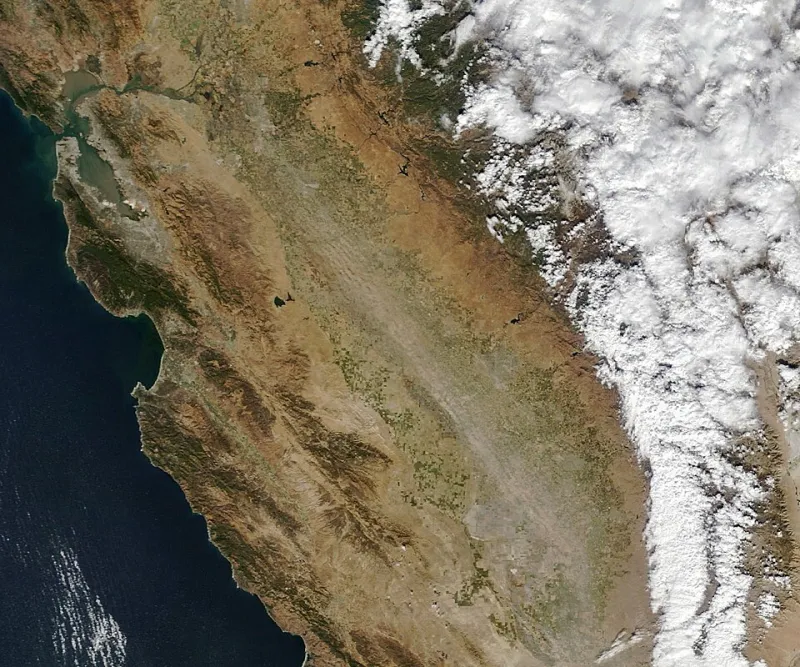
Photo: NASA Earth Observatory images by Michala Garrison, using MODIS data from NASA EOSDIS LANCE and GIBS/Worldview. Story by Adam Voiland., Public domain, via Wikimedia Commons
When Failure Becomes a Field Guide
There is a kind of knowledge that only comes from losing. Not from studying loss, not from modeling it in a simulation, but from standing in a field you planted yourself and watching it die. American farmers have accumulated that knowledge in brutal quantities across the last century — through drought, debt, chemical disaster, and climate chaos. Most of that knowledge evaporated when the farms did. But sometimes, a farmer walked off the land carrying everything they had learned, and eventually found a way to put it to use.
These are seven of those people.
1. The Dust Bowl Farmer Who Mapped the Wind
When the Black Sunday storm of 1935 buried his Oklahoma panhandle farm under a wall of black soil, he didn't just lose his crops. He lost his topsoil — the accumulated biological wealth of centuries — in a single afternoon. He spent the next three years documenting exactly how it happened: which fields stripped first, which windbreaks held, which soil compositions resisted erosion and which surrendered almost immediately.
He brought those handwritten observations to a Soil Conservation Service office in Amarillo, expecting nothing. What happened instead was that a federal soil scientist took one look at his field notes and told him he had documented something researchers had been theorizing about for years but couldn't confirm without ground-level data. His firsthand erosion maps became foundational to early windbreak and contour farming programs that eventually helped stabilize millions of Great Plains acres.
2. The Iowa Corn Farmer Who Saved the Seed
She had been breeding her own corn varieties for thirty years before a combination of falling commodity prices and a devastating fungal blight wiped out three consecutive harvests and forced her to sell the farm. She left carrying mason jars. Inside them: seed samples she had been quietly selecting and preserving since the 1960s, varieties her neighbors had long since abandoned in favor of commercial hybrids.
Those jars eventually made their way to a university extension program, where plant geneticists discovered she had preserved genetic diversity that commercial seed banks had already lost. Several of her varieties carried blight-resistance traits that became critical in developing hardier commercial strains two decades later. She had saved them not because she foresaw their scientific value, but because she couldn't stand to let something she had grown disappear.
3. The California Orchardist Who Understood Thirst
He farmed almonds in the Central Valley for twenty-two years before a combination of drought and water rights disputes made the operation impossible to sustain. By the time he walked away, he had developed an almost obsessive understanding of how trees signal water stress — subtle changes in leaf angle, bark color, fruit development timing — that no instrument he knew of could measure as accurately as his own eyes.
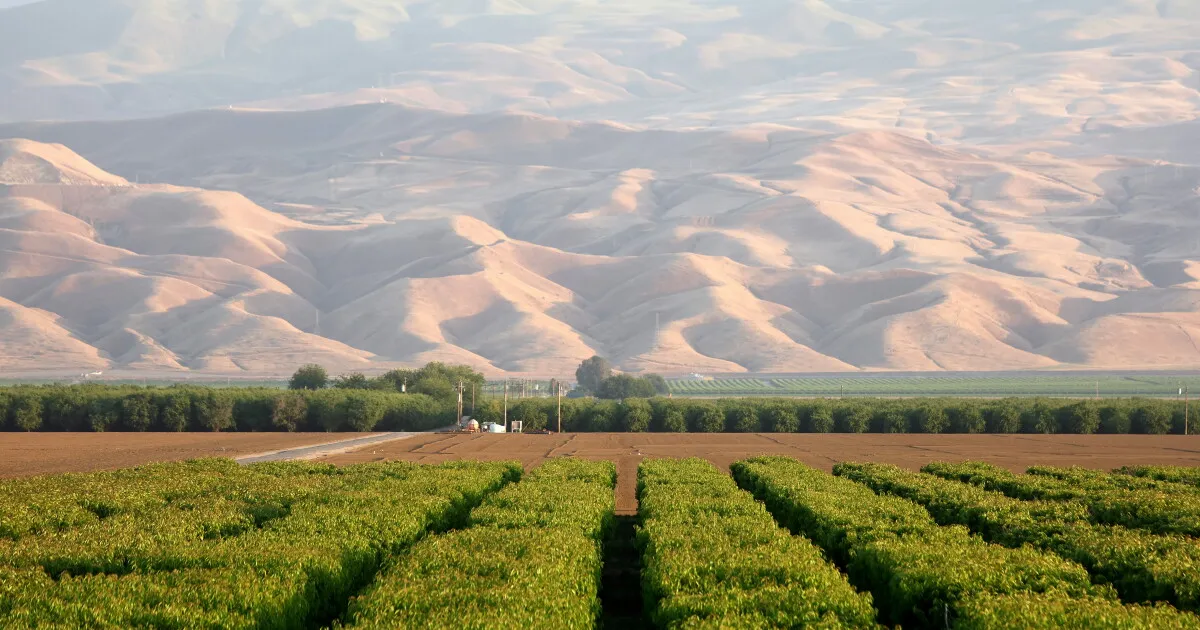 Photo: Central Valley, via scpr.brightspotcdn.com
He eventually partnered with an agricultural engineering program at UC Davis, where his observational knowledge helped calibrate early precision irrigation sensors. The technology that came out of that collaboration — systems that measure plant stress rather than just soil moisture — is now used across hundreds of thousands of acres of California farmland, reducing water consumption in one of the most water-stressed agricultural regions on earth.
4. The Mississippi Delta Farmer Who Read the Rain Differently
Four generations of his family had farmed cotton in the Delta before flooding and falling prices ended it. He had grown up watching his grandfather read the sky in ways that didn't match anything in a meteorology textbook — cloud formations, insect behavior, the color of the horizon at dusk. When he eventually found his way into a climate research program at a Mississippi university, he brought those observations with him.
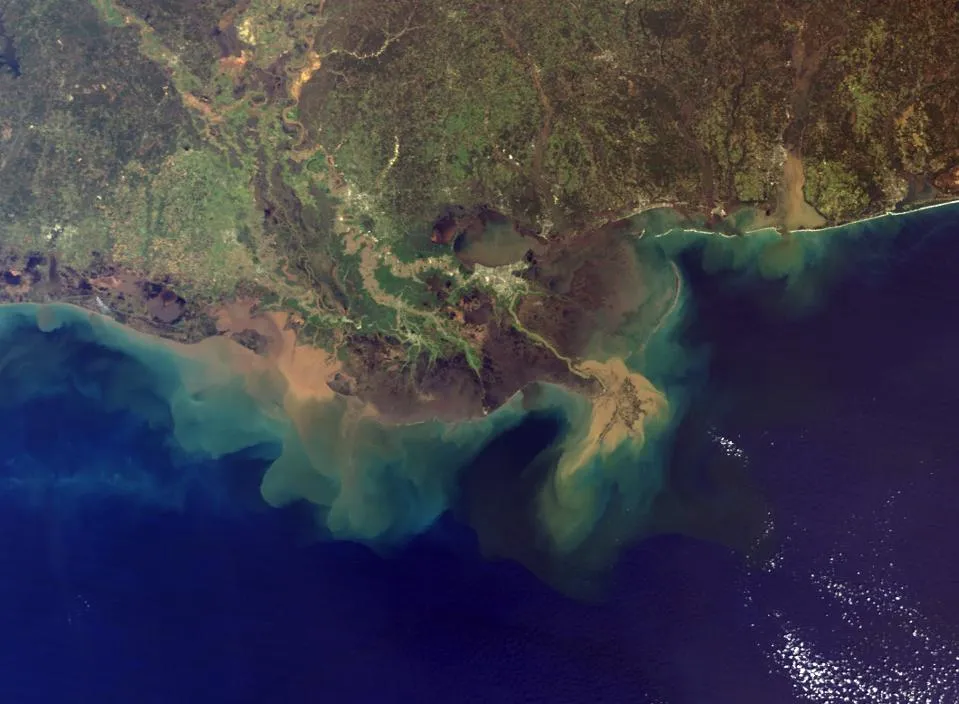 Photo: Mississippi Delta, via specials-images.forbesimg.com
Researchers were initially skeptical. Then they started checking his predictions against their models. His informal forecasting methods, refined through decades of farming life, identified localized precipitation patterns that standard regional models consistently missed. His work contributed to improved micro-climate modeling tools now used to help smallholder farmers across the Gulf South manage flood and drought risk.
5. The Nebraska Rancher Who Noticed What the Cattle Noticed
She had ranched cattle on the Nebraska Sandhills for fifteen years before a series of brutal winters and a collapsing beef market forced her out. What she carried with her was an intimate understanding of how cattle behave in response to environmental stress — patterns she had observed thousands of times and which, she was convinced, predicted weather and range conditions days before any official forecast.
A wildlife biologist she met at an agricultural extension event took her seriously enough to spend a summer testing her observations. What emerged was a research paper on ungulate behavior as an early indicator of atmospheric pressure changes — a paper that was cited in subsequent work on using animal behavior as low-cost environmental monitoring in remote rangelands. She is listed as a co-contributor. It is the only academic paper she has ever been part of. She says it's enough.
6. The Vermont Dairy Farmer Who Followed the Bacteria
He had managed a small organic dairy operation in Vermont for a decade before an antibiotic-resistant mastitis outbreak devastated his herd and made the farm economically unviable. The outbreak, and his desperate attempts to understand and contain it, turned him into an accidental expert on bovine bacterial resistance. He spent two years documenting the outbreak's progression with a rigor that surprised the veterinary consultants he eventually contacted.
His records helped a University of Vermont research team establish one of the earliest detailed field studies of antibiotic resistance transmission in small dairy herds — research that fed directly into updated federal guidelines on antibiotic use in livestock. He now consults for agricultural health programs. He describes himself, with some accuracy, as a farmer who got a PhD the hard way.
7. The Texas Dryland Farmer Who Followed the Bees
She farmed dryland wheat in West Texas for eighteen years, and for most of that time she kept meticulous records of pollinator activity on and around her fields — not for any scientific purpose, but because she was curious and because the bees fascinated her. When persistent drought and debt finally ended her farming life, she took those records to a Texas A&M entomologist almost on a whim.
What she had documented, without knowing it, was a two-decade record of native bee population decline in a region where almost no long-term pollinator data existed. Her notebooks became the baseline dataset for a significant regional pollinator study. Her observations are now cited in federal pollinator protection policy discussions. She finds this mildly absurd and entirely wonderful.
What the Land Teaches That the Lab Cannot
All seven of these people share something beyond agricultural backgrounds and hard luck. They share a quality of attention that comes from depending on the land for your livelihood — a watchfulness that is not passive observation but active survival. When that watchfulness has nowhere left to go on the farm, it doesn't disappear. It looks for somewhere else to be useful.
Agriculture has always been one of America's great unacknowledged schools of science. The people who farm carry data in their bodies and in their notebooks that no research grant has funded and no university has formally collected. When disaster forces them off the land, the question is whether anyone is paying enough attention to catch what they bring with them.
These seven people found someone who was listening. How many others didn't?