The Trait That Almost Stopped Them: Seven Americans Whose Greatest Weakness Turned Out to Be Their Edge

Every system has a preferred type. Schools reward certain kinds of intelligence. Sports programs select for certain kinds of bodies. Workplaces promote certain kinds of personalities. The people who fit the preferred type move through these systems smoothly, collecting credentials and confidence in roughly equal measure.
The people who don't fit tend to collect something else: a long list of things they've been told they can't do, shouldn't try, or simply aren't built for.
What follows are seven American stories about the gap between what the system saw and what was actually there.
1. Temple Grandin — Too Fixated to Function (Until the Fixation Fed the World)
Temple Grandin was diagnosed with autism at a time when the diagnosis carried almost no productive framework — just a set of limitations and a general expectation of constrained possibility. Her intense, almost consuming fixation on specific subjects was treated as a symptom to be managed rather than a capacity to be directed.
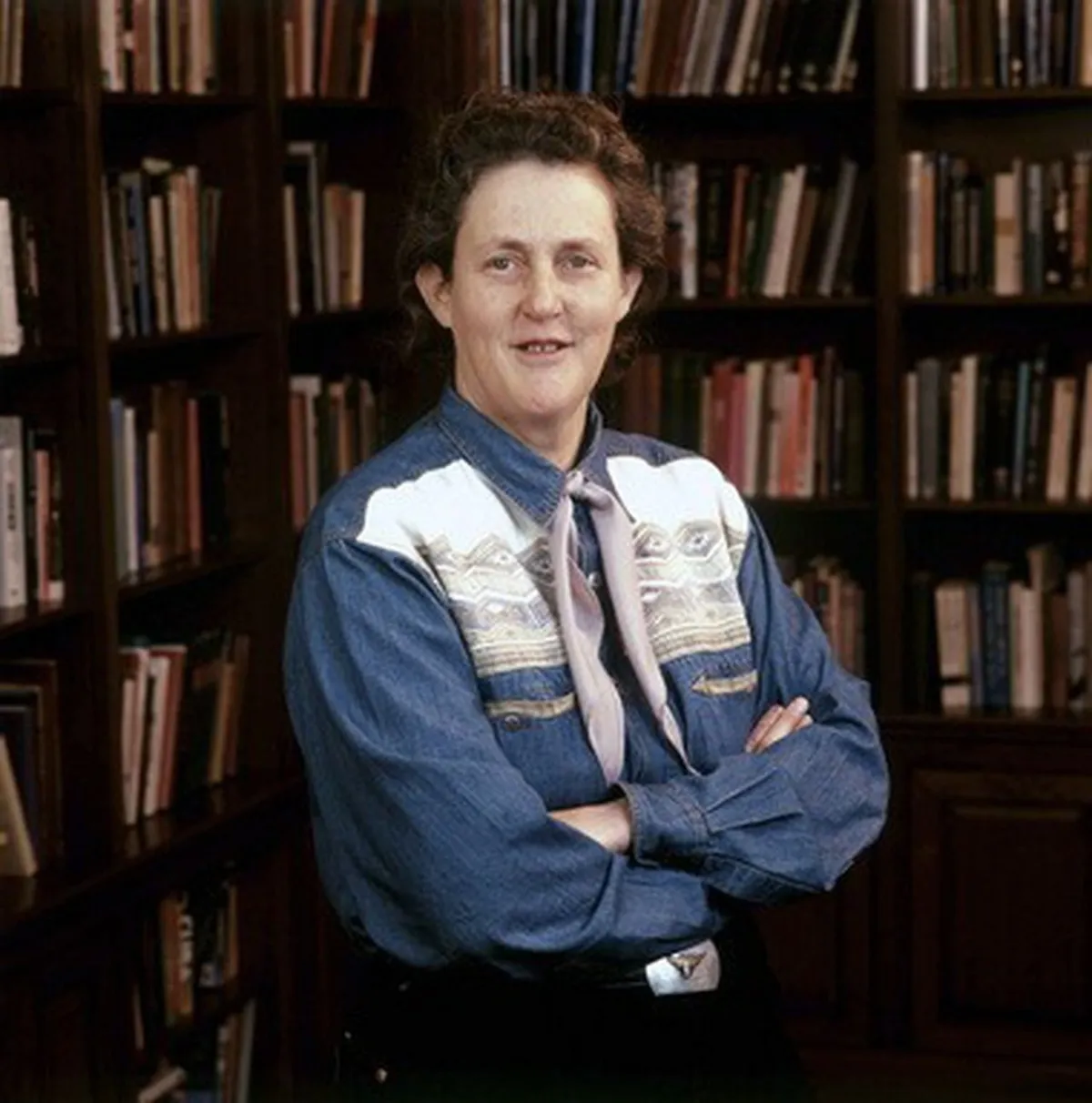 Photo: Temple Grandin, via www.cleveland.com
What the clinical language missed was that Grandin's ability to visualize systems in three dimensions — to mentally walk through a cattle chute and feel it from the animal's perspective — was extraordinary. She used that ability to redesign livestock handling facilities across the United States, creating systems that reduced animal stress and transformed industry practice. Today, it's estimated that nearly half of the cattle handling facilities in North America use designs influenced by her work.
The fixation wasn't the problem. The fixation was the whole point.
2. Barbara McClintock — Too Eccentric for the Mainstream (Until the Mainstream Caught Up)
In the male-dominated world of mid-20th century genetics, Barbara McClintock was considered many things: brilliant, certainly, but also difficult, overly solitary, and frankly strange. Her insistence on spending long hours alone with her corn plants, her reluctance to publish until she was certain, her unconventional way of describing her relationship to the organisms she studied — all of it placed her outside the acceptable range of scientific personality.
When she presented her discovery of genetic transposition — the idea that genes could move between chromosomes — at a 1951 symposium, the response ranged from polite confusion to open dismissal. She was decades ahead of the scientific consensus. She kept working anyway, in the same quiet, eccentric manner that had always made the mainstream uncomfortable.
In 1983, she was awarded the Nobel Prize in Physiology or Medicine. She was 81 years old. The field had finally caught up to the strange woman who had been working alone in her cornfield.
3. Jim Abbott — One Hand, One Dream, Zero Room for Doubt
Jim Abbott was born without a right hand. The conventional wisdom in baseball — a sport built on an almost ritualistic insistence on physical symmetry — was that this made a pitching career effectively impossible. The mechanics didn't work. The fielding position was untenable. The scouts looked and moved on.
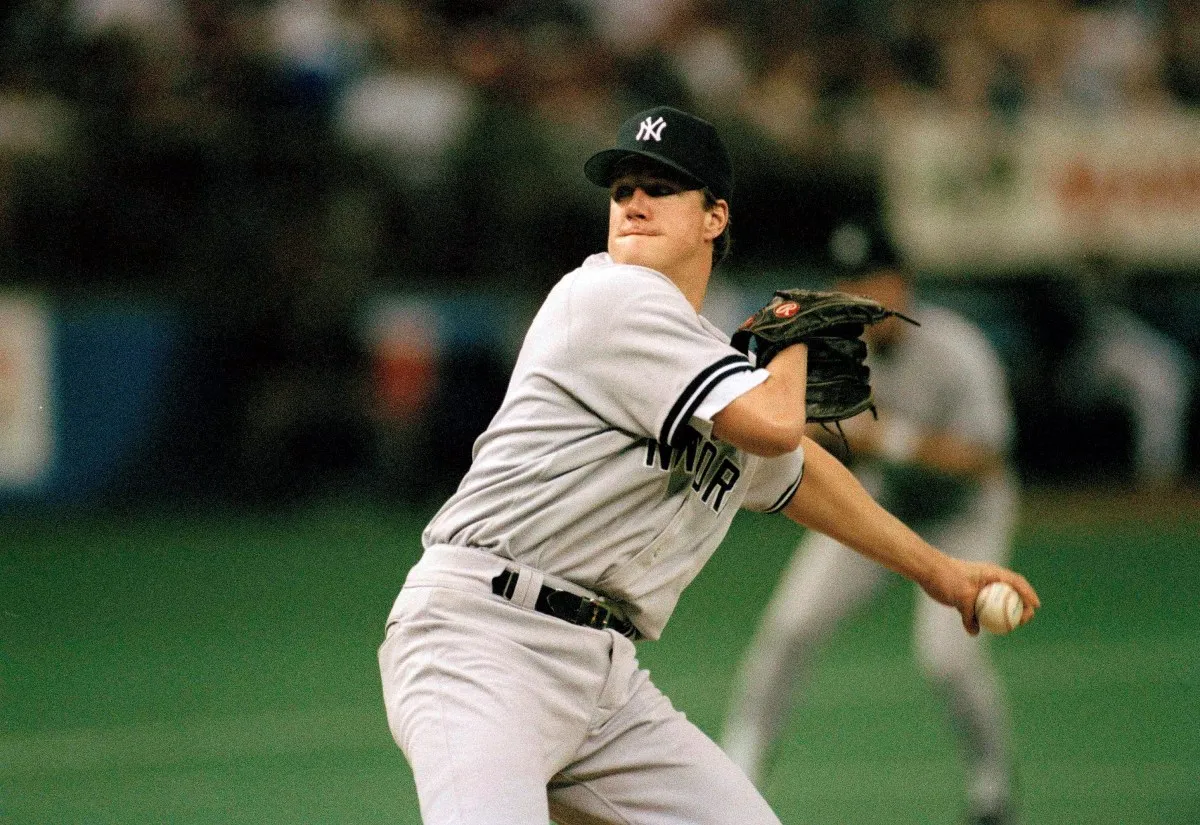 Photo: Jim Abbott, via eldiariony.com
Abbott spent his childhood developing a fielding technique that allowed him to pitch, transfer his glove, and field his position with a fluency that silenced the skeptics one by one. He pitched for the University of Michigan, won a gold medal at the 1988 Olympics, and went on to a major league career that included a no-hitter for the New York Yankees in 1993.
The hand that wasn't there never defined what he could do. It just made the people watching him more attentive to everything that was.
4. Patricia Bath — Too Persistent for Her Own Good (Except for the Patients She Saved)
Patricia Bath was told, at multiple points in her career, that she was pushing too hard, moving too fast, and advocating too loudly for communities that the medical establishment had historically underserved. As one of the first African American women to complete a residency in ophthalmology in the United States, she was navigating a profession that had not been built with her in mind and was not always gracious about being pushed to reconsider itself.
The persistence that made her difficult to work with was the same persistence that drove her to develop the Laserphaco Probe, a device that revolutionized cataract surgery and restored sight to patients who had been blind for decades. She became the first African American woman to receive a medical patent. The communities she had been told to stop advocating for were the ones whose health outcomes she spent her career improving.
5. Glenn Gould — Too Weird for the Concert Stage (Until the Recordings Outlived Everyone)
Glenn Gould was, by any reasonable measure, a deeply strange concert pianist. He hummed audibly while he played. He insisted on performing seated at an almost comically low height, using a chair his father had built when Gould was a child. He wore heavy coats and gloves in warm weather. He talked to his hands. He had deeply unconventional ideas about tempo and interpretation that made traditional critics uneasy.
In 1964, at the height of his performing career, he simply stopped giving concerts. He retired from the stage at 31 and spent the rest of his life recording.
Those recordings are now considered among the most important in classical music history. His 1981 re-recording of the Goldberg Variations, made the year he died, is studied and loved in ways that suggest Gould understood something about the relationship between music and intimacy that the concert hall format never let him fully express. The weirdness wasn't incidental to the genius. It was the same thing.
6. Greta Thunberg's American Counterpart: Bill Nye Before He Was Bill Nye
Before Bill Nye became the Science Guy, he was an engineer at Boeing in Seattle who was widely regarded as the office eccentric — the guy who entered a Steve Martin look-alike contest on a whim and won, who made jokes that landed about half the time, and who had an almost compulsive need to explain how things worked to anyone who would listen. His managers were not uniformly enthusiastic about the explaining.
He started doing stand-up comedy about science on local Seattle television in the late 1980s, a move that most people in his professional circle considered a bizarre hobby. By the mid-1990s, Bill Nye the Science Guy was reaching millions of children every week and winning Emmy Awards. He has since been credited, by scientists across multiple fields, as the reason they became interested in science in the first place.
The compulsive explaining that made him a slightly odd presence in an engineering office turned out to be the most important scientific communication tool of a generation.
7. Simone Biles — Too Small, Too Powerful, and Absolutely Unclassifiable
At 4 feet 8 inches, Simone Biles was told early in her gymnastics career that her body type — compact, explosive, almost incomprehensibly powerful for her size — would limit her. The sport had aesthetic conventions. The judges had preferences. The expectation was that her style would need to be softened and refined to be competitive at the highest levels.
 Photo: Simone Biles, via discoverlyrics.com
Biles refused the refinement. She kept the power. She developed skills so technically demanding that the sport's governing body eventually named multiple elements after her, including skills that judges initially scored conservatively because they were concerned other gymnasts would attempt them without sufficient training. She is, at the time of this writing, the most decorated American gymnast in history.
The body that didn't fit the sport's aesthetic preferences turned out to be capable of things the sport had never seen before.
What the List Is Really About
There is a pattern here that is worth sitting with. In almost every case, the trait that drew criticism or dismissal was not separate from the exceptional achievement — it was directly connected to it. The fixation. The persistence. The strangeness. The explosive physicality. The compulsive need to explain.
Systems sort people by the standards the system was built around. The standards are not neutral, and they are not complete. They capture some things and miss others, and what they most reliably miss is the person who is building something the system doesn't yet have a category for.
The question worth asking, after reading these seven stories, is not which of your traits the system has flagged as a problem. The question is what that trait has been quietly building while you weren't looking.