They Laughed First. Then the World Changed.

Photo: San Diego Air & Space Museum Archives, Public domain, via Wikimedia Commons
There's a particular kind of American story that starts in embarrassment. Not failure — failure is almost respectable. This is something sharper: the moment when someone stands up in a room full of experts, says something true, and gets laughed at.
It happens more than history admits. And the people it happens to tend to be the ones who end up changing things.
Here are seven of them.
1. Ida Tarbell — The Woman Who Took On Standard Oil and Was Told to Go Home
In 1900, when Ida Tarbell told her editors at McClure's Magazine that she wanted to spend two years investigating John D. Rockefeller's Standard Oil Company, the reaction was somewhere between amusement and alarm. Rockefeller controlled roughly 90 percent of American oil refining. He was the richest man in the country. Tarbell was a magazine writer from rural Pennsylvania.
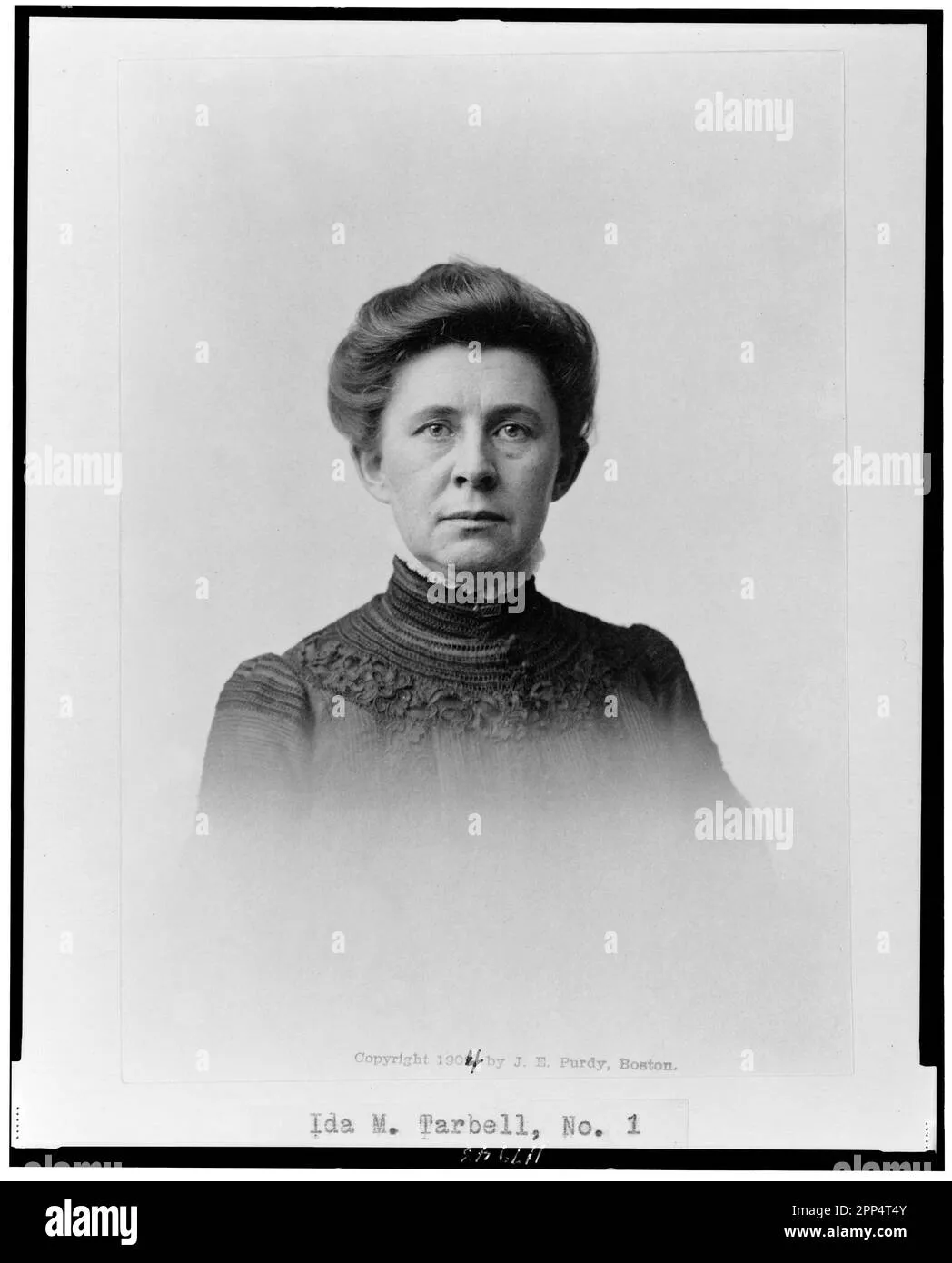 Photo: Ida Tarbell, via c8.alamy.com
The oil industry wasn't worried. Rockefeller's associates reportedly referred to her investigation as the work of a "lady historian" — a phrase designed to communicate both condescension and dismissal in a single breath.
In 1904, The History of the Standard Oil Company was published. It ran to nearly 900 pages. It documented price manipulation, industrial espionage, and the systematic destruction of competitors with a level of evidentiary precision that left no room for rebuttal. Eight years later, the Supreme Court ordered Standard Oil broken up into 34 separate companies.
The lady historian had done all right.
2. Ignaz Semmelweis — The Doctor Who Said Wash Your Hands and Got Committed
In 1847, a Hungarian physician working in Vienna noticed something that should have been obvious: women giving birth in wards staffed by medical students who had just come from performing autopsies were dying at catastrophic rates. He proposed that doctors were carrying something invisible on their hands from the dead to the living, and that washing with chlorinated lime solution would stop it.
 Photo: Ignaz Semmelweis, via imgcdn.stablediffusionweb.com
The medical establishment's response was furious. Germ theory didn't exist yet, and Semmelweis couldn't explain why his intervention worked — only that it did. His colleagues found his implication offensive: that they were killing their patients. He was ridiculed in journals, dismissed from his position, and eventually committed to a mental institution.
He died there in 1865, at 47, possibly from an infection of the kind he had spent his career trying to prevent.
Fifteen years later, Louis Pasteur and Joseph Lister confirmed everything he had said. Today, handwashing protocols in American hospitals are a direct descendant of an idea that got a man institutionalized.
3. Chester Carlson — The Inventor Every Company in America Turned Down
In 1938, a patent attorney named Chester Carlson invented a dry copying process in his kitchen in Queens, New York. He called it electrophotography. He spent the next six years trying to sell it.
IBM said no. General Electric said no. RCA said no. The U.S. Army Signal Corps said no. More than 20 major corporations reviewed his invention and passed. The consensus was that there simply wasn't a market for a machine that made copies of documents — people used carbon paper, and that was fine.
In 1947, a small photographic paper company in Rochester called Haloid licensed the technology. They renamed it xerography. The company eventually renamed itself Xerox. By 1965, the Xerox 914 was generating more revenue than any other product in American business history.
The 20 companies that passed are not remembered.
4. Barbara McClintock — The Geneticist Who Was Told Her Science Was Science Fiction
In 1951, Barbara McClintock presented her research on genetic transposition — the idea that genes could move around within a chromosome — to a conference of her peers at Cold Spring Harbor. The audience sat in near-silence. A few people laughed. Most were simply confused. A geneticist in attendance later described the reaction as "puzzlement, even hostility."
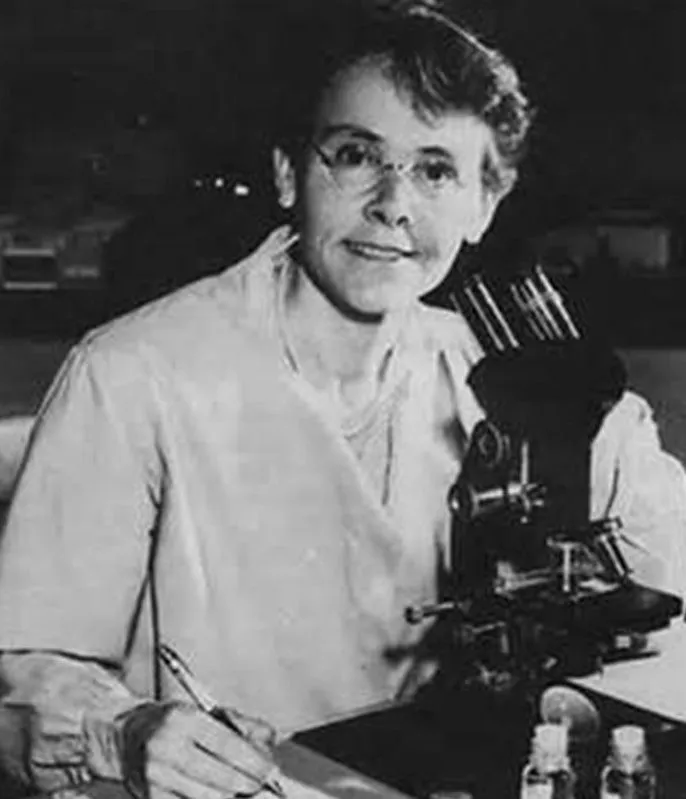 Photo: Barbara McClintock, via i.pinimg.com
McClintock went back to her lab at Cold Spring Harbor and kept working. She published. She was largely ignored. For two decades, her work was considered too strange to be useful.
In 1983, she received the Nobel Prize in Physiology or Medicine. She was 81. The committee called her discovery one of the two great surprises in genetics of the 20th century. She accepted the prize with characteristic composure and went back to her lab the following Monday.
5. Fred Smith — The Student Whose Business Plan Got a C
In 1965, a Yale undergraduate named Fred Smith turned in an economics paper describing a system for overnight package delivery using a hub-and-spoke air freight network. His professor returned it with a grade of C and a note suggesting that for the idea to earn better than a passing grade, it would need to be feasible.
Seven years later, Smith founded Federal Express with $4 million of inherited money and $80 million in venture capital — the largest venture capital startup in American history at that time. On its first night of operations in 1973, FedEx delivered 186 packages.
Today FedEx handles roughly 16 million shipments daily. The professor's name is not recorded.
6. Oprah Winfrey — The Anchor Who Was Told She Was Unfit for Television
In 1976, a 22-year-old Oprah Winfrey was fired from her job as a television reporter at WJZ in Baltimore. Her producer told her she was "unfit for TV news." She was reassigned to co-host a morning talk show called People Are Talking as what amounted to a professional demotion.
The show's ratings climbed immediately. She moved to Chicago in 1984 to host a failing morning program. Within a month, it was beating Donahue. Within a year, it had gone national.
By 1988, The Oprah Winfrey Show was the highest-rated talk show in American television history. By 2003, she was the first Black female billionaire in the world. The producer who called her unfit for television is not a household name.
7. Dr. Barry Marshall — The Scientist Who Drank the Bacteria to Prove He Was Right
In 1983, an Australian physician named Barry Marshall proposed that stomach ulcers were caused not by stress or spicy food, as the entire medical establishment believed, but by a bacterium called Helicobacter pylori. He was laughed out of conferences. His paper was rejected. Gastroenterologists who had built careers on the stress hypothesis were not interested in being corrected by a young doctor from Perth.
In 1984, Marshall did something that remains one of the most dramatic acts of scientific self-belief in history: he drank a petri dish of H. pylori culture, developed gastritis within days, and cured himself with antibiotics.
The medical community remained skeptical for another decade. In 2005, Marshall and his colleague Robin Warren were awarded the Nobel Prize in Physiology or Medicine.
Millions of Americans who once managed ulcers for life now take a two-week course of antibiotics and are cured. It started with a man who was willing to be sick to prove everyone else wrong.
The Pattern
Seven different people, seven different fields, seven different rooms full of people who were certain. What they share isn't genius exactly — it's something quieter and harder to name. A willingness to keep working after the laughter stops. A refusal to let the consensus become the ceiling.
The room that laughs at you is never the last room. It's just the first one.