Every Morning He Walked the Same Route. Every Night He Wrote America Down.
The boxes arrived six months after Walter Briggs died.
His daughter had been clearing out the back bedroom of his house in Youngstown, Ohio — the room he'd always kept locked, which she'd assumed contained tax records or old tools — when she found them stacked against the far wall. Fourteen cardboard boxes, carefully sealed, each one labeled in her father's handwriting with a number and a year.
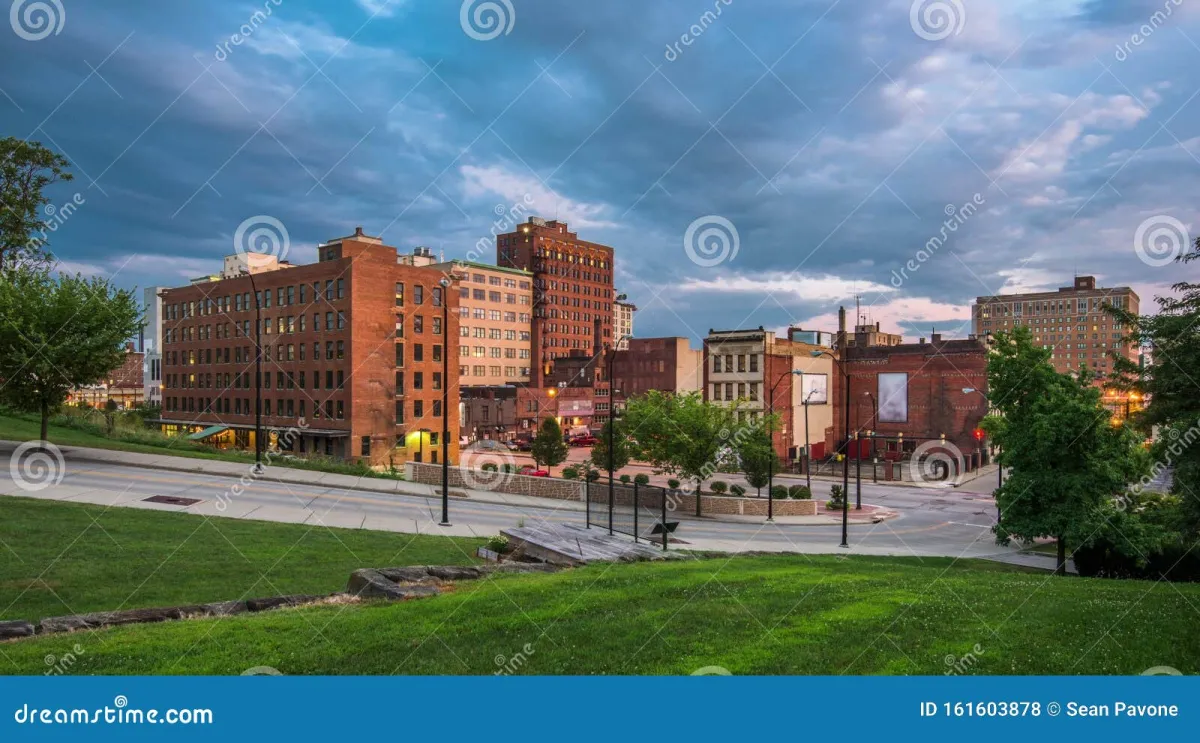 Photo: Youngstown, Ohio, via thumbs.dreamstime.com
Inside were manuscripts. Dozens of them. Novels, novellas, short story collections. Some typed, some handwritten, some in both. Each one meticulously revised, with margin notes and crossed-out passages and the kind of layered editing that signals not a hobbyist but someone who understood exactly what they were doing and cared enormously about doing it well.
Walter Briggs had carried mail on Glenwood Avenue for thirty-four years. He had also, in the hours between dinner and sleep, written an unofficial literature of the American working class that nobody had ever read.
 Photo: Glenwood Avenue, via www.wkbn.com
The Route as Research
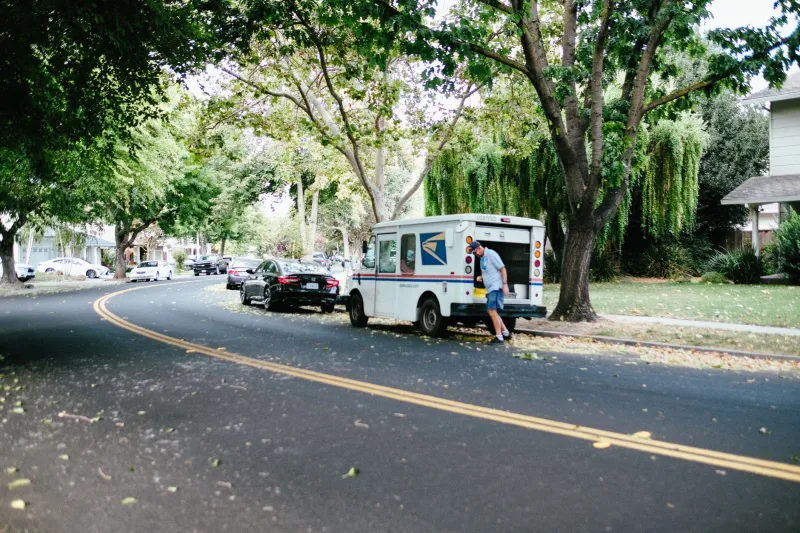
There is a particular kind of knowledge that comes from showing up somewhere every single day for decades. Not studying it. Not visiting. Just being present, reliably, in the same place, watching the same households change across the span of a life.
Briggs started his route in 1951, the year after he returned from Korea. He'd grown up in Youngstown, the son of a steelworker, and the postal service offered what the steel mills also offered but with somewhat less risk of losing a limb: steady work, a pension, a reason to get up in the morning.
What it also offered, though nobody would have framed it this way at the time, was an education in American domestic life that was available to almost no one else.
He saw who got eviction notices and who got college acceptance letters. He watched families grow and fracture. He noticed which houses went quiet after a husband came home from a second war, and which ones got loud again after a daughter moved back with children of her own. He delivered the letters that announced deaths and the ones that announced divorces and the ones that were clearly from loan companies trying to sound like personal correspondence.
He never talked about what he saw. But he wrote it down.
The Manuscripts
The scholars who eventually catalogued the Briggs collection — the papers are now held at Youngstown State University — describe a body of work that is startling in its consistency and range.
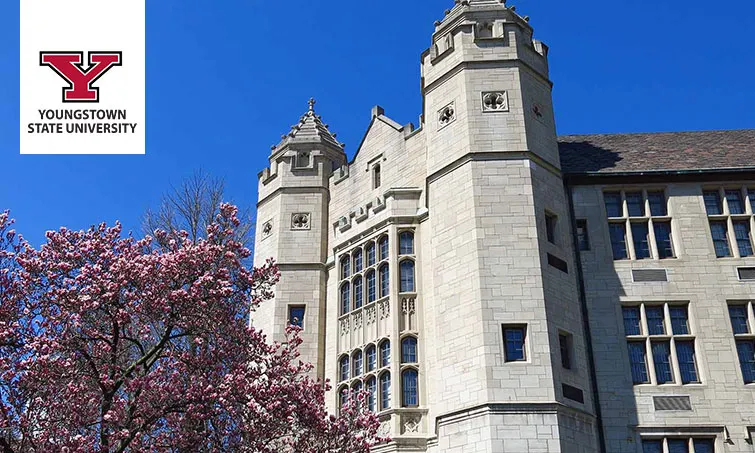 Photo: Youngstown State University, via static.sliit.lk
His novels are not plot-driven in the conventional sense. They are character studies of extraordinary depth, set almost entirely in the industrial Midwest, populated by people whose lives are shaped by forces they can name but not control: the mill closing, the neighborhood changing, the slow economic erosion of a city that was promised things it wasn't going to receive.
What makes them remarkable isn't just the accuracy of the observation, though the accuracy is remarkable. It's the tone. Briggs writes about his characters without pity and without condescension. He doesn't romanticize poverty or working-class life. He doesn't make it grim and instructive, either. He simply renders it with the kind of unsentimental affection that comes from genuine proximity — from having knocked on those doors every morning for thirty years and paid attention to who answered.
One scholar who reviewed the collection described it as what Steinbeck might have written if he'd actually lived there instead of passing through.
Why He Never Tried to Publish
This is the question that haunts the story, and the honest answer is that we don't entirely know.
His daughter remembers him writing. She remembers the light under the door of the back room on weeknights, and the way he'd emerge looking tired but not depleted, the way a person looks after spending time on something that costs them but also returns something. She doesn't remember him ever talking about what he was writing, or mentioning publishers, or seeming to want anything from the work beyond the work itself.
There are a few letters in the collection — unsent, tucked into one of the manuscript boxes — that suggest he did consider submitting at least once. One is addressed to a New York literary agency and describes his work with a kind of careful, self-aware modesty that is almost painful to read. It was written in 1963 and never finished.
It's possible he decided the world wouldn't be interested. The literary culture of mid-century America was not exactly clamoring for fiction about Youngstown mail carriers. The voices that broke through from working-class backgrounds often had to find a way to make their experience legible to a readership that was, in the main, educated and middle-class. That required a kind of translation that Briggs, based on his unsent letter, seemed uncertain he could perform.
It's also possible he simply didn't need publication the way some writers do. The boxes suggest a man who found the writing itself to be the point — who spent thirty-four years building something magnificent in private because the building was the reward.
Neither explanation is entirely satisfying. Both are probably true.
What Gets Lost
The Briggs collection was published in a limited scholarly edition in 2019. It received respectful reviews in literary journals and a single long piece in a mid-sized cultural magazine. It has not become a bestseller. It probably won't.
There's something worth sitting with in that fact.
American culture has always had a complicated relationship with the kind of success that doesn't announce itself. We celebrate the overnight discovery, the manuscript found in an attic that changes everything, the genius recognized at last. But the recognition, when it comes, is often partial and quiet. The books that should have been on shelves in 1965 are in an archive in 2024, read by researchers and the occasional curious reader who stumbles across a footnote.
What Walter Briggs captured — the texture of a specific American life, in a specific American place, at a specific moment in the country's industrial history — is not available from any other source. The people on Glenwood Avenue in 1955 are not coming back. Their letters have been recycled. Their houses have been sold or demolished. The only record of what it felt like to live inside those lives, from the particular vantage point of the man who showed up at their door every morning, is in fourteen cardboard boxes that spent forty years in a locked room.
We almost lost it entirely.
The Walk He Always Took
Briggs retired in 1985. His daughter says he still walked the route sometimes, out of habit or affection or something harder to name. He'd get up early, make coffee, and head out toward Glenwood Avenue without the bag, without the uniform, just walking.
She asked him once what he was doing out there.
He said he was checking in.
That's not a bad description of what his writing does. Thirty-four years of checking in. Thirty-four years of paying attention to lives that the larger culture had no particular interest in documenting. Thirty-four years of coming home and writing it down before it disappeared.
He never got famous. He barely got read. But he left behind something that the celebrated writers of his era, for all their talent and recognition, simply could not have made: a portrait of ordinary American life drawn from the inside, by someone who was always there, who never stopped noticing, and who trusted — even without an audience — that what he saw was worth keeping.