Before the Breakthrough: The Long Unseen Years Behind America's 'Sudden' Geniuses
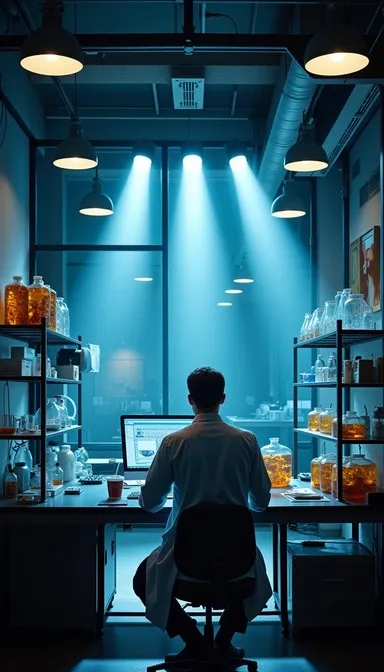
Photo: scientist working late alone in laboratory dim lighting, via images.stockcake.com
In 1928, a Scottish bacteriologist noticed something odd in a discarded petri dish, and medicine changed forever. That's the version you know — the mold, the accident, the miracle. Here's the version that matters: Alexander Fleming had spent nearly two decades studying bacteria, much of it unglamorous, much of it unremarked. The famous dish wasn't luck landing on a bystander. It was luck landing on a man who had trained himself, over years of tedium, to notice it.
That's the pattern behind almost every 'sudden' breakthrough in American science. The lightning bolt gets the headline. The twenty years of wiring the rod gets a footnote, if that.
The Decade Before the Dish
Take Barbara McClintock, the geneticist whose work on jumping genes eventually won a Nobel Prize. The prize came in 1983. The work? She'd done the core of it by the early 1950s — and the scientific establishment responded by politely ignoring her for thirty years. She didn't rage about it. She kept working at Cold Spring Harbor, in relative obscurity, on maize, because the question still interested her. When recognition finally arrived, she was in her eighties and famously unimpressed by the fuss. The world had simply caught up to a conversation she'd been having alone for decades.
Or consider Katalin Karikó — though her breakthrough came in Pennsylvania, not a lab with a view. For years, her research into messenger RNA was the kind of work that gets grant applications rejected. And rejected. And rejected again. Colleagues reportedly encouraged her to change course. She demoted herself rather than abandon the question. Then, in 2020, mRNA technology became the foundation of COVID-19 vaccines, and a scientist most Americans had never heard of became one of the most consequential figures in modern medicine. The breakthrough took a weekend to matter. It took decades to be possible.
The Unsexy Middle
What actually happens in those invisible years? Almost nothing that photographs well.
It's the day job. Percy Julian, the pioneering chemist who synthesized medicinal compounds from plants, spent years in positions beneath his talent — including a stretch teaching at a small Black college — because no research institution would hire him at his level. The synthesis of physostigmine that made his reputation came out of work he did in conditions his white peers would have refused. The science was brilliant. The circumstances were a wall he climbed daily.
It's the failed draft. Charles Townes, whose laser work earned a Nobel, spent years on microwave research that seemed to lead nowhere in particular — an amplification problem nobody thought was interesting enough to fund generously.
And it's the empty room. The lecture with four attendees. The paper cited twice in its first decade. Every scientist interviewed about their 'overnight' success describes the same thing: a long corridor with no doors, and the choice to keep walking anyway.
The Moment the World Looked Up
Here's the trick every one of these stories plays: the breakthrough moment and the beginning moment are separated by a chasm the public never sees.
When McClintock's Nobel was announced, reporters treated it as a revelation. When Karikó's work became the backbone of a pandemic response, the profile pieces wrote themselves. But the person at the center of each story could tell you exactly how unremarkable the middle was. Fleming's dish is famous; his twenty years of careful bacterial study are not. The world notices the spark and calls it the fire.
There's a lesson in that for anyone mid-corridor. If your work isn't landing — if the applications come back, if the audience is four people, if the dish keeps getting thrown out — you're not failing at the part of the story that matters. You're in the part that never makes the plaque. The plaque only remembers the spark.
Keep wiring the rod.