She Spent 17 Years in Prison and Walked Out to Become One of America's Most Celebrated Chefs
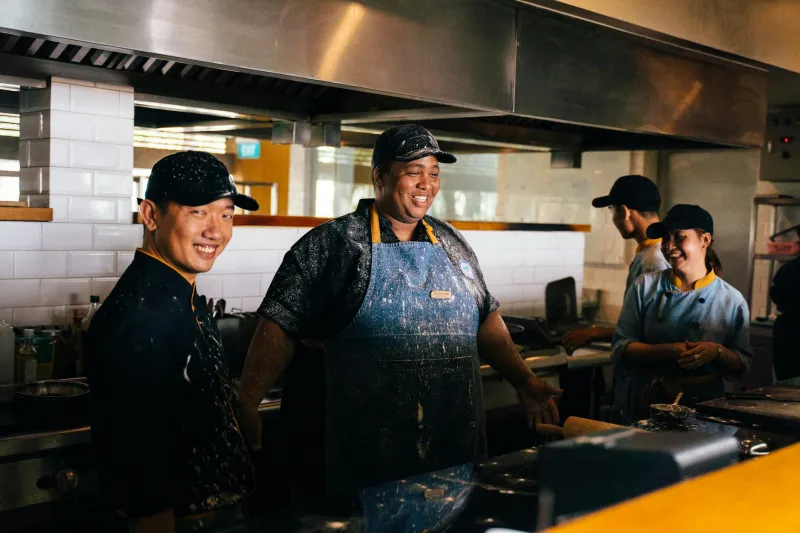
The Kitchen That Changed Everything
The first time Maria Santos stepped into the prison kitchen at Central California Women's Facility, she was running from something. Not literally—though she'd tried that too, which is how she ended up with a 20-year sentence for armed robbery. No, she was running from the crushing weight of what her life had become at 23: a high school dropout with a baby she'd never see grow up, facing two decades behind bars.
The kitchen job paid 37 cents an hour. It was hot, thankless work that most inmates avoided. But for Maria, it became something else entirely: a classroom where failure had consequences no worse than burnt rice, and success tasted like hope.
"I didn't know a whisk from a spatula when I started," Maria recalls, laughing at the memory. "The first time they asked me to make gravy, I handed them what looked like concrete mix. But nobody was going anywhere, and neither was I. So I had time to learn."
An Unlikely Culinary School
Prison kitchens aren't known for nurturing culinary talent. They're designed for efficiency, not education—feeding thousands on budgets that would make McDonald's accountants wince. But Maria found mentors in unexpected places.
There was Chef Rodriguez, a lifer who'd worked in San Francisco restaurants before a night of bad decisions changed everything. He taught her that cooking wasn't about following recipes—it was about understanding ingredients, respecting the process, and feeding people with intention.
"He'd watch me dice onions and shake his head," Maria remembers. "Then he'd take the knife and show me again. 'Mija,' he'd say, 'you're not just cutting vegetables. You're building flavor. Every cut matters.'"
The prison library became her second classroom. Maria devoured cookbooks the way other inmates read romance novels. She memorized techniques she couldn't practice, studied flavor combinations she couldn't taste, and dreamed of kitchens she might never see.
Building Something From Nothing
By her fifth year, Maria was running the kitchen's special events—holiday meals that transformed the cafeteria into something approaching festive. Working with commodity cheese and canned vegetables, she learned to create dishes that made women forget, for a moment, where they were.
The breakthrough came during her eighth year, when a new program brought culinary instructors from the outside. Maria's natural leadership and growing expertise caught their attention. Soon, she was teaching other inmates basic cooking skills, turning the prison kitchen into an informal culinary school.
"Food became my language," she explains. "When someone was having a bad day, I'd make them something special with whatever we had. A birthday cake from scratch mix that actually tasted like celebration. Soup that felt like a hug. I realized I wasn't just cooking—I was healing."
The Test That Changed Everything
In year 12, opportunity knocked in an unexpected form: a culinary competition between California's women's prisons. Maria led her team to victory with a three-course meal that impressed professional judges—including James Beard Award winner Chef Patricia Williams, who would later become Maria's business partner.
"I tasted her food and immediately knew this wasn't prison cooking," Chef Williams recalls. "This was soul food in the truest sense—technically excellent but emotionally profound. I'd never experienced anything like it."
That competition victory opened doors Maria had stopped believing existed. Culinary magazines wrote about the "prison chef" whose story was spreading through California's food scene. Restaurants began reaching out, offering jobs upon her release.
Freedom and Fear
When Maria walked out of Central California Women's Facility in 2019, she carried two things: a cardboard box of personal belongings and a head full of dreams that terrified her.
The world had changed in 17 years. Smartphones, social media, food delivery apps—technology that made her feel ancient at 40. But kitchens remained familiar territory, and Chef Williams was waiting with an offer that seemed impossible: partnership in a new restaurant concept.
"The hardest part wasn't learning new cooking techniques," Maria admits. "It was believing I deserved to be there. Prison teaches you to make yourself small, to not take up space. Running a restaurant kitchen requires the opposite."
Second Chances, First Class
Sacramento's "Second Harvest" opened in 2021 with Maria as executive chef and co-owner. The restaurant's mission was simple: exceptional food prepared by people who'd been written off by society. Half the kitchen staff were formerly incarcerated individuals trained in Maria's program.
The food critics came expecting a story about redemption and found something more: genuinely outstanding cuisine. Maria's signature dish—a braised short rib with root vegetables that somehow transformed humble ingredients into something transcendent—earned comparisons to the city's most acclaimed restaurants.
"She cooks with an intensity I've rarely seen," wrote Sacramento Bee food critic David Chen. "Every plate feels like both an apology and a promise—sorry for what was, committed to what could be."
The Empire of Second Chances
Today, Second Harvest has expanded to three locations across California. Maria's cookbook, "Measured in Love: Recipes for Starting Over," became a New York Times bestseller. She's been featured on every major cooking show and consulted with prisons nationwide on culinary training programs.
But perhaps most importantly, she's employed over 200 formerly incarcerated individuals, proving that second chances aren't just about forgiveness—they're about recognizing talent that society too often throws away.
"People ask me if I'm angry about losing 17 years," Maria reflects, knife in hand as she prepares for another dinner service. "But those weren't lost years. They were the years that taught me who I really am. I wouldn't be the chef I am today without every single day I spent learning in that prison kitchen."
The Recipe for Redemption
Maria's story challenges everything Americans think they know about justice, punishment, and human potential. In a country that often treats incarceration as a dead end, she proved it could be a beginning.
Her success hasn't erased her past—the armed robbery conviction remains on her record, a reminder of the night that changed everything. But it's no longer the defining chapter of her story. Instead, it's become the prologue to something extraordinary: proof that sometimes our greatest mistakes become the foundation for our most meaningful achievements.
As dinner service begins at Second Harvest, Maria surveys her kitchen with the quiet satisfaction of someone who found their calling in the most unlikely place. The knives are sharp, the stations are ready, and the team—many of whom share her journey from incarceration to inspiration—prepares to feed a city that's learned to see possibility where others saw only problems.
Some stories of redemption are written in courtrooms or boardrooms. Maria Santos wrote hers one dish at a time, proving that the most extraordinary transformations often happen in the humblest kitchens, measured not in years lost but in lives changed—starting with her own.