The Kid Who Threw Rocks at His Mother and Became America's Most Famous Brain Surgeon
The Moment Everything Could Have Ended
The hammer was already in Ben Carson's hand when his friend called him stupid. It was 1961, and the fourteen-year-old was listening to music with friends in Detroit when someone made a crack about his choice of radio station. The rage that had been building inside Ben for years — the same fury that made him throw rocks at his mother, attack classmates, and terrorize his neighborhood — exploded in an instant.
He swung the hammer at his friend's head.
The hammer connected with the boy's belt buckle and shattered. If that buckle had been an inch higher, Ben Carson later realized, he would have killed someone. Instead of becoming one of the world's most celebrated neurosurgeons, he would have spent his life in prison.
But this story doesn't start with hammers or rage. It starts with a mother who couldn't read.
When Rock Bottom Has a Basement
Sonya Carson was twenty-three years old with a third-grade education when she discovered her husband had another family. Suddenly, she was alone in Detroit with two young sons, no money, and no prospects. Ben was eight years old, his brother Curtis was ten, and both boys were already showing signs of the academic failure that seemed inevitable in their circumstances.
Ben's grades were catastrophic. In fifth grade, his classmates openly mocked him as the dumbest kid in class. His teachers had essentially given up. His neighborhood friends were already talking about dropping out, dealing drugs, or joining gangs. Every statistical predictor suggested Ben Carson would become another casualty of urban poverty.
Sonya Carson looked at her son's report card and made a decision that would change American medicine forever.
The Library Experiment That Rewrote History
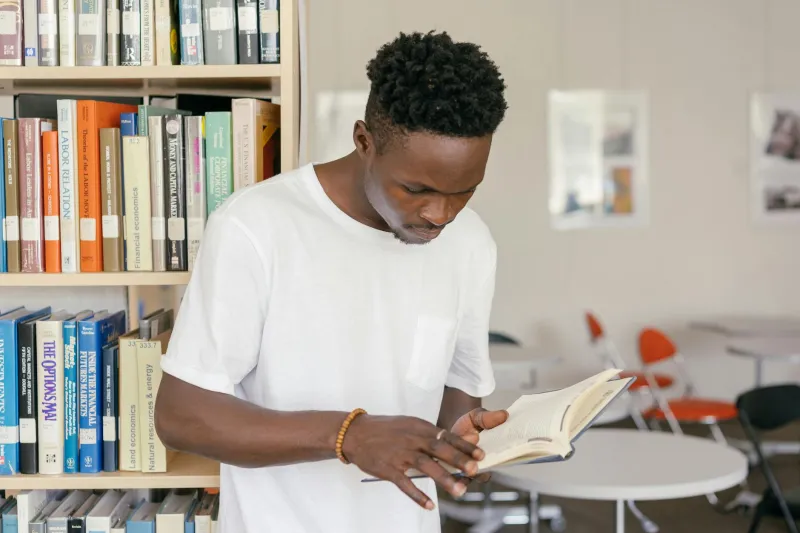
The decision was as simple as it was radical: no more than two television shows per week. Instead, Ben and Curtis would visit the Detroit Public Library every week, check out two books each, and write reports on what they read.
There was just one problem. Sonya Carson couldn't read the reports her sons were writing.
She had hidden her illiteracy so successfully that even her own children didn't know. When Ben and Curtis handed over their book reports, she would take them seriously, make thoughtful noises, and hand them back with encouraging comments. She was performing literacy while engineering it in her children.
"I don't want to hear 'I'm bored,'" she told them. "If you're bored, it means you're not thinking."
The Transformation Nobody Saw Coming
Something extraordinary began happening in Ben's mind. The kid who couldn't spell his own name correctly started recognizing words from his reading when teachers wrote them on blackboards. The boy who sat silent in class because he had nothing to contribute suddenly found himself raising his hand.
The turning point came in eighth grade science class. The teacher held up a piece of obsidian and asked if anyone knew what it was. Ben had read about volcanic glass in a geology book the week before. His hand shot up.
"Obsidian," he said.
The class fell silent. This was the same Ben Carson they had written off as hopeless. His teacher stared at him in amazement. For the first time in his life, Ben felt what it was like to be the smartest person in the room.
That single moment cracked something open. The boy who had been labeled learning disabled was actually intellectually gifted — he just needed someone to force him to exercise his mind.
From Detroit Streets to Johns Hopkins
Ben's grades didn't just improve — they soared. By high school, he was at the top of his class. He earned a scholarship to Yale University, where he majored in psychology. From there, he went to the University of Michigan Medical School, and eventually landed a residency at Johns Hopkins Hospital, one of the most prestigious medical institutions in the world.
But the real test of his transformation came in 1987, when he was asked to attempt something that had never been done successfully: separating twins conjoined at the back of their heads.
The Surgery That Made History
The Binder twins from Germany were joined at the back of their skulls, sharing blood vessels and brain tissue. Previous attempts to separate such twins had always resulted in the death of one or both children. At thirty-five years old, Ben Carson was being asked to attempt the impossible.
The surgery took twenty-two hours. Carson led a team of seventy medical professionals through a procedure so complex it had never been successfully completed. When it was over, both twins were alive and neurologically intact.
The boy who had once thrown rocks at his mother had just rewritten the possibilities of neurosurgery.
The Mother Who Couldn't Read But Changed Everything
Sonya Carson's secret remained hidden for decades. It wasn't until Ben was already famous that she finally learned to read, enrolling in literacy classes in her sixties. She had spent years pretending to review book reports she couldn't understand, trusting that the simple act of making her sons read would unlock something powerful in their minds.
She was right. Curtis Carson became an engineer. Ben became the director of pediatric neurosurgery at Johns Hopkins at age thirty-three, the youngest person ever to hold that position.
The transformation that began in a Detroit library — engineered by a mother who couldn't read the very books she demanded her sons consume — ultimately saved thousands of children's lives and expanded what medical science thought possible.
Sometimes the most extraordinary achievements begin with the most ordinary acts of faith. Sonya Carson couldn't read her sons' book reports, but she could read their potential. That turned out to be enough to change everything.