The Man Who Built America's Most Beautiful Buildings Without a Degree to His Name
The Man Who Built America's Most Beautiful Buildings Without a Degree to His Name
Let's say you're hiring an architect.
You'd probably want someone with a degree from an accredited program. Maybe a prestigious firm on their résumé. A clean professional history, solid references, no dramatic personal controversies. You'd want someone whose credentials signal that they've been vetted, trained, and approved by the appropriate institutions.
You would not, based on those criteria, have hired Frank Lloyd Wright. And American architecture would be immeasurably poorer for it.
One Semester and a Decision That Changed Everything
Wright enrolled at the University of Wisconsin–Madison in 1886, studying civil engineering because there was no architecture program available. He lasted less than a year before dropping out — not because he failed, but because he'd apparently decided that what he needed to learn couldn't be found in a classroom.
He was nineteen. He packed his bags, pawned some books and a mink collar that belonged to his father, and bought a train ticket to Chicago. He arrived with a few dollars in his pocket and an ambition that was, by any reasonable measure, wildly disproportionate to his circumstances.
Within weeks, he'd talked his way into a drafting job. Within a few years, he was working under Louis Sullivan — one of the founding fathers of modern American architecture — absorbing everything he could from a mentor he would later both celebrate and betray.
The credential he never got? He seemed to barely notice its absence.
The Outsider's Advantage
Here's the argument worth making, and it's one that Wright's career supports with uncomfortable clarity: formal architectural training in the late nineteenth century was, in many ways, a machine for producing a particular kind of building. It taught proportion and precedent. It looked to Europe — to classical forms, to Beaux-Arts grandeur — for its authority.
Wright didn't have those guardrails. He had Sullivan's organic principles, his own restless eye, and a childhood spent in the rural Wisconsin landscape that had given him an almost spiritual attachment to the idea of buildings that grew from their surroundings rather than being imposed on them.
Without the weight of institutional training pressing him toward convention, he went somewhere else entirely.
The Prairie Style houses he began designing in the early 1900s — low-slung, horizontal, with rooflines that seemed to echo the flat Midwestern landscape — looked like nothing that had existed before. They weren't European. They weren't classical. They were, for the first time in American architecture, genuinely, stubbornly American.
Clients who commissioned them were, in many cases, getting something they didn't fully understand yet. That's often how it goes with Wright.
The Chaos That Ran Alongside the Genius
It would be dishonest to tell Wright's story as a simple triumph of the self-taught underdog. His life was, by any fair accounting, a spectacular mess for long stretches.
He abandoned his wife and six children in 1909 to run off to Europe with the wife of a client — a scandal that detonated his reputation at the precise moment his career was gaining serious momentum. He came back to America to find his professional standing in ruins and his personal life in free fall.
In 1914, while Wright was away, a servant set fire to his Wisconsin home, Taliesin, and murdered seven people inside — including his partner, Mamah Borthwick. The horror of that event would have destroyed most people. Wright rebuilt Taliesin. Literally. He started reconstruction almost immediately.
He married twice more, both times chaotically. He ran from creditors with a creativity that almost matched his design work. He was sued, abandoned, mocked, and written off so many times that keeping track requires a dedicated timeline.
And through all of it, he kept designing.
The Buildings That Outlasted the Scandals
Fallingwater, completed in 1935 in rural Pennsylvania, is probably the most famous private residence ever built. It sits cantilevered over a waterfall, jutting out from the rock as though it grew there organically, the sound of moving water present in every room. When it was unveiled, the architectural establishment — which had spent years dismissing Wright as a has-been — went quiet.
He was sixty-eight years old. He'd been written off for decades. He had no degree, a ruined reputation, multiple failed marriages, and a client list that had nearly evaporated.
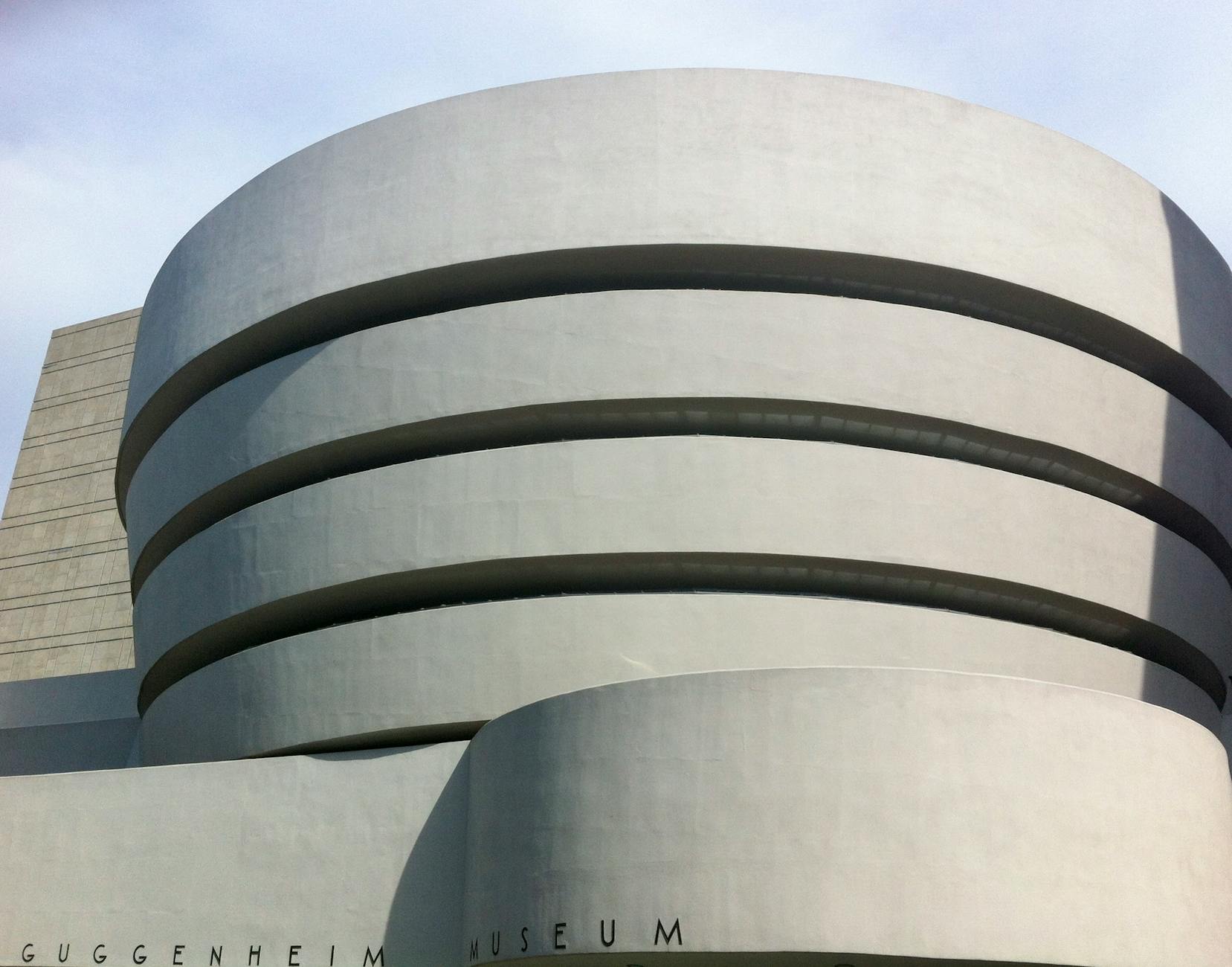
Fallingwater was just the beginning of his late-career renaissance. The Johnson Wax Headquarters in Racine, Wisconsin. The Guggenheim Museum in New York City, with its revolutionary spiral ramp that made every other museum feel like a waiting room. Dozens of Usonian homes — affordable, elegant, democratic — designed specifically for middle-class American families.
He was still designing the Guggenheim at ninety-one. He died in 1959, sixteen days after surgery, at ninety-one years old. The Guggenheim opened that same year.
What the Résumé Can't Teach
There's a version of the Frank Lloyd Wright story that presents his lack of credentials as something he overcame. This gets it exactly backward.
The credential he never received was from a system that would have taught him to build the way buildings had already been built. The Europe-facing, classically trained architects of his era produced beautiful, accomplished work — and almost none of it changed anything. Wright's work changed everything, specifically because he was never fully inside the system he was reinventing.
His outsider status wasn't a gap in his formation. It was the formation.
That's not a comfortable argument for a culture that has built an entire economy around the credentialing process — around the idea that the right degree from the right school is the most reliable signal of future greatness. Wright's career is a sustained, eighty-year counterargument to that assumption.
None of which means that dropping out of college leads to genius. Most people who drop out of college don't design Fallingwater. But Wright's story does suggest something worth sitting with: that the institutions we trust to produce excellence sometimes also sand off the very edges that make excellence possible.
He kept his edges. Sharp, inconvenient, and occasionally destructive as they were.
And the buildings are still standing.