They Signed Up for Something Else: The Accidental Athletes Who Stumbled Into Greatness
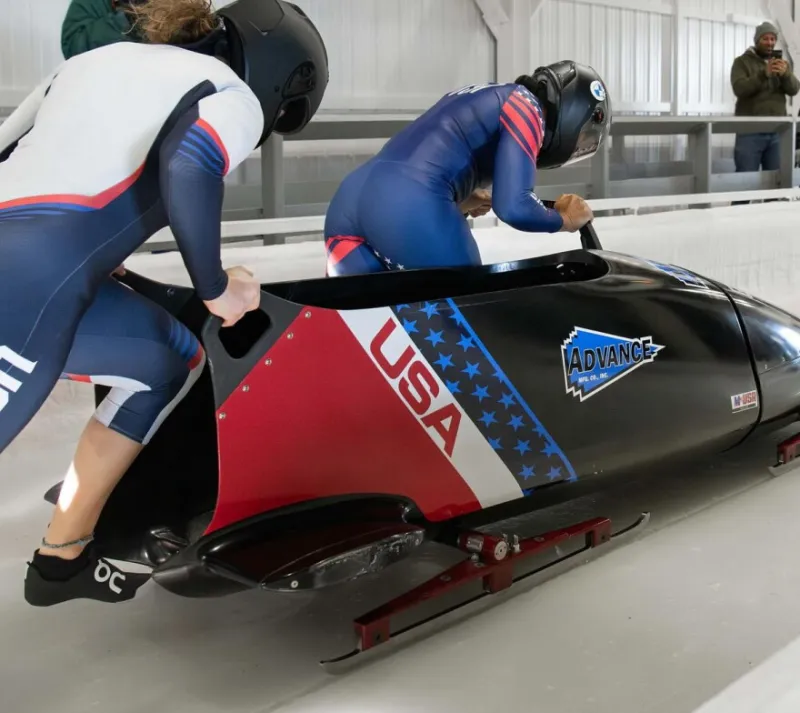
Photo: bobsled athlete pushing sled on ice track, via npr.brightspotcdn.com
There's a story we love to tell about great athletes: the prodigy who was hitting curveballs at seven, the gymnast scouted at four, the swimmer who basically lived in the pool before kindergarten. It's a tidy story. It's also not the only story.
Some of the most remarkable careers in American sports began as a detour — a backup plan, a rehab assignment, a favor to a friend. And when you look closely at how those careers unfolded, a pattern emerges that's worth sitting with: sometimes the thing you were meant to do is the thing you hadn't gotten around to yet.
The Pool Was Prescribed
Dara Torres didn't start swimming competitively until she was seven, which by today's club-sport standards is practically retirement age. But the more striking case is the swimmer whose entry into the water had nothing to do with sport at all.
Consider the number of elite American swimmers who were first pushed into a pool by doctors, not coaches. For kids recovering from injuries or dealing with childhood asthma, swimming was the safe option — the low-impact activity that wouldn't make things worse. The pool was a prescription. Nobody in that moment is dreaming of Olympic finals.
And yet the water rewards a certain kind of person: patient, obsessive, willing to stare at a black line for hours. The kids who arrive late often bring a hunger the lifers don't have. They know what the alternative is. They've seen themselves be something else.
Diana Nyad didn't swim her legendary open-water crossings until well into adulthood — and famously attempted her record-setting Cuba-to-Florida swim at 64, after decades away from the sport. Her late arrival wasn't a handicap. It was arguably the whole point: she brought to the water a maturity and stubbornness that no teenage phenom could match.
The Tryout That Wasn't Supposed to Matter
Then there's the bobsled pipeline — one of the strangest talent systems in American sport.
Here's how it works: the United States doesn't exactly have frozen tracks in every neighborhood. So instead of developing bobsledders from childhood, the national program has historically gone looking for fast people and taught them the rest. College sprinters, football players who didn't make the league, track athletes who showed up to an open tryout on a whim — these are the raw materials of American bobsledding.
Lauryn Williams won Olympic silver in track. Then she showed up to a bobsled recruitment camp, learned to push a sled down ice at 80 miles an hour, and won Olympic silver again — in a completely different sport. Herschel Walker, the football legend, competed in Olympic bobsled. Johnny Quinn went from NFL roster cuts to pushing a sled in Sochi.
None of these people spent their childhoods dreaming of ice channels in Park City, Utah. The sport found them. Or more accurately, they wandered into a tryout that was printed on the bottom of someone's priority list, and something clicked.
Why Late Might Actually Be Better
We tend to treat a late start as lost time. But talk to coaches and a different picture emerges.
A 10-year-old learning a sport learns it one way. A 22-year-old learning it learns it deliberately — with body awareness, with intent, with an adult's capacity to study and adjust. The late starter doesn't carry a decade of bad habits baked in by well-meaning volunteer coaches. They arrive as a clean slate with an engine already built.
There's also the matter of identity. The kid who's been "the swimmer" since age six sometimes freezes when the sport stops being fun — because the sport is the self. The athlete who arrived by accident holds the sport more loosely. They can take risks. They can walk away and come back. They can, like Dara Torres, return to Olympic competition at 41 and medal.
The accident of the late start builds a kind of psychological slack that early specialization often burns away.
The Backup Plan Theory of Everything
There's a broader lesson here that extends well past the track and the pool, and it's this: the plans we cling to the hardest are often the plans we're least suited for.
The athletes in this story didn't find their sport through vision or destiny. They found it through injury, boredom, a flyer on a bulletin board, a doctor's orders. What made them extraordinary wasn't the finding — it was the willingness to take the strange door seriously once it opened.
Most people, handed an unexpected opportunity, treat it as a consolation prize. They go through the motions, half-present, still mourning the original plan. The accidental athletes did the opposite. They showed up to the rehab pool like it was the main event. They treated the bobsled tryout like it mattered.
That's the real secret hiding in these stories, and it's available to anyone: the right path often doesn't announce itself. It looks, at first, like a detour. The only difference between a backup plan and a calling is what you do on the second day.
So if your first dream just ended — if the injury happened, the tryout failed, the original plan collapsed — take some strange comfort from the sled pushers and the prescribed swimmers. The detour isn't the end of the road.
Sometimes it's the first time you were actually on one.